
Wind-Load + Pressure Testing
Façade wind-load and performance testing for Ghana — ASTM E330 structural (wind) load, ASTM E283 air infiltration, ASTM E331 and AAMA 501.1 dynamic water penetration, and full-scale mock-up testing for high-rise. Facade Ghana proves the envelope before it goes on the building, since 1982.
Façade wind-load and pressure testing is how you prove the building’s skin will hold — before it is on the building. A façade has to resist the wind pushing and pulling on it, keep the rain out under that same wind, and not leak air around its joints; on a tall building those pressures are large and a failure is expensive and dangerous. Facade Ghana has engineered and verified performance façades across Ghana since 1982, and on this discipline our job is simple: fail on the test rig, not on the tower.
Why You Test the Envelope Before You Build It
A façade looks finished long before anyone knows whether it actually performs. Air leakage, water ingress under wind-driven rain, and excessive deflection under wind load are invisible until the weather finds them — and by then the façade is on the building and the fix is scaffolding, disruption and dispute. Testing a full-scale mock-up moves that discovery to a test rig, where a failing gasket or a leaking joint costs a re-seal and a re-test instead of a re-clad. The purpose of testing is to find the weakness in the cheapest possible place.
Choosing the Right Test Scope for Your Building
Not every building needs the full mock-up programme, and over-testing a simple façade wastes money as surely as under-testing a tower risks it. The scope follows the building: its height, its exposure, the design wind pressure on its worst elevation, and how unusual the façade is. A demanding high-rise warrants a full-scale mock-up with the complete air-water-structural sequence; a lower, sheltered façade may be verified more simply. We set the scope to the risk, then test honestly to standard.
Façade Performance Tests
Structural (Wind) Load — ASTM E330
The façade is loaded to its design wind pressure — positive (pushing in) and negative (sucking out) — and its deflection and strength are measured against ASTM E330. This proves the framing, glass and fixings carry the wind without permanent damage or excessive movement.
Air Infiltration — ASTM E283
Air leakage around the joints, gaskets and openings is measured under pressure to ASTM E283. Excess air leakage means lost conditioning, draughts and a façade that is not as sealed as the drawings claim.
Water Penetration — ASTM E331 & AAMA 501.1
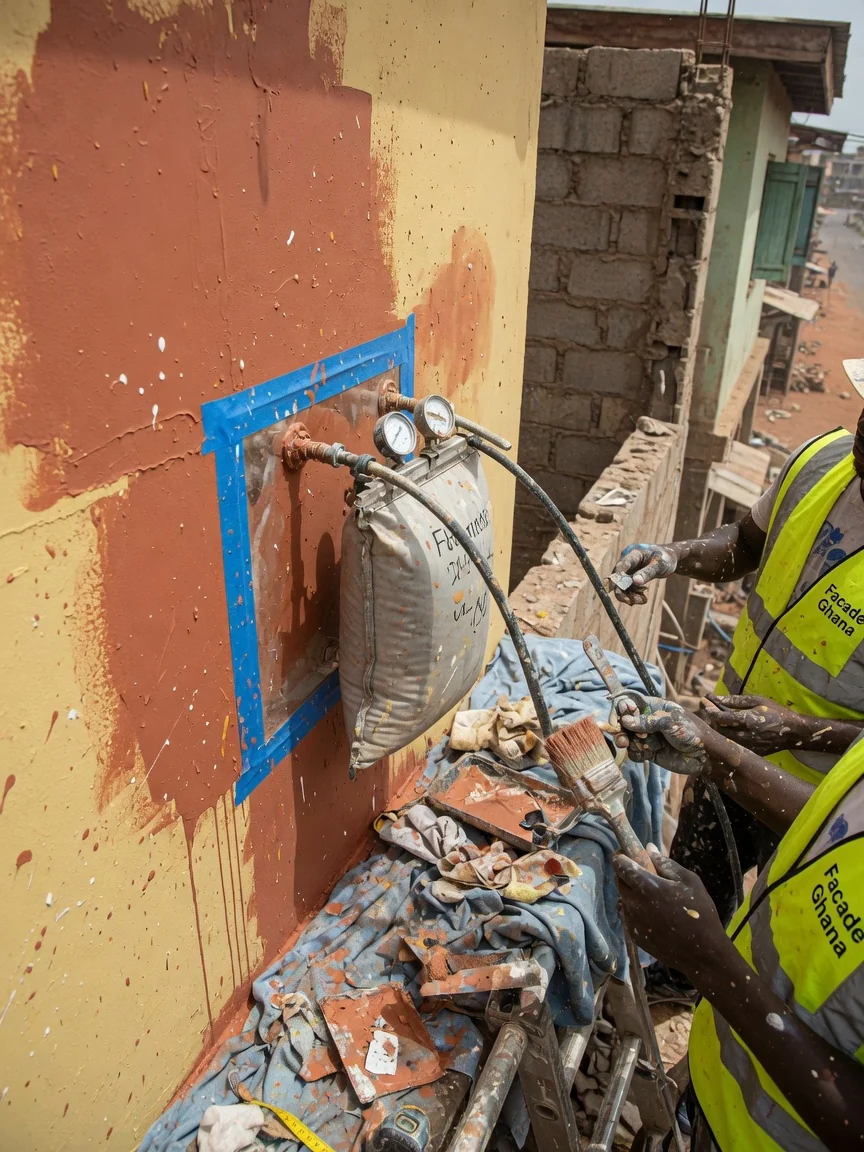
Weathertightness is proven two ways: ASTM E331 applies water under a steady static pressure, while AAMA 501.1 dynamic water penetration drives the water with a wind source to simulate real wind-driven rain. Both confirm the façade keeps the weather out under the pressure it will actually meet.
Full-Scale Mock-Up Testing
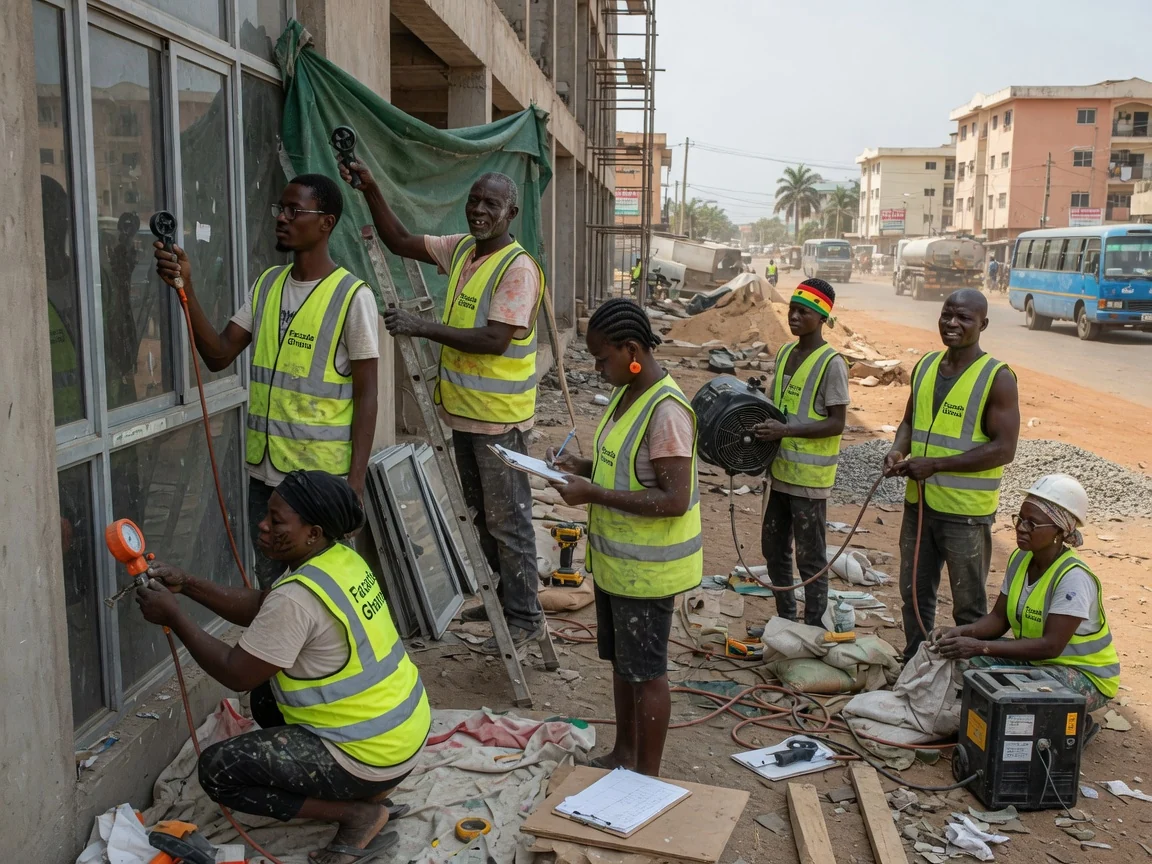
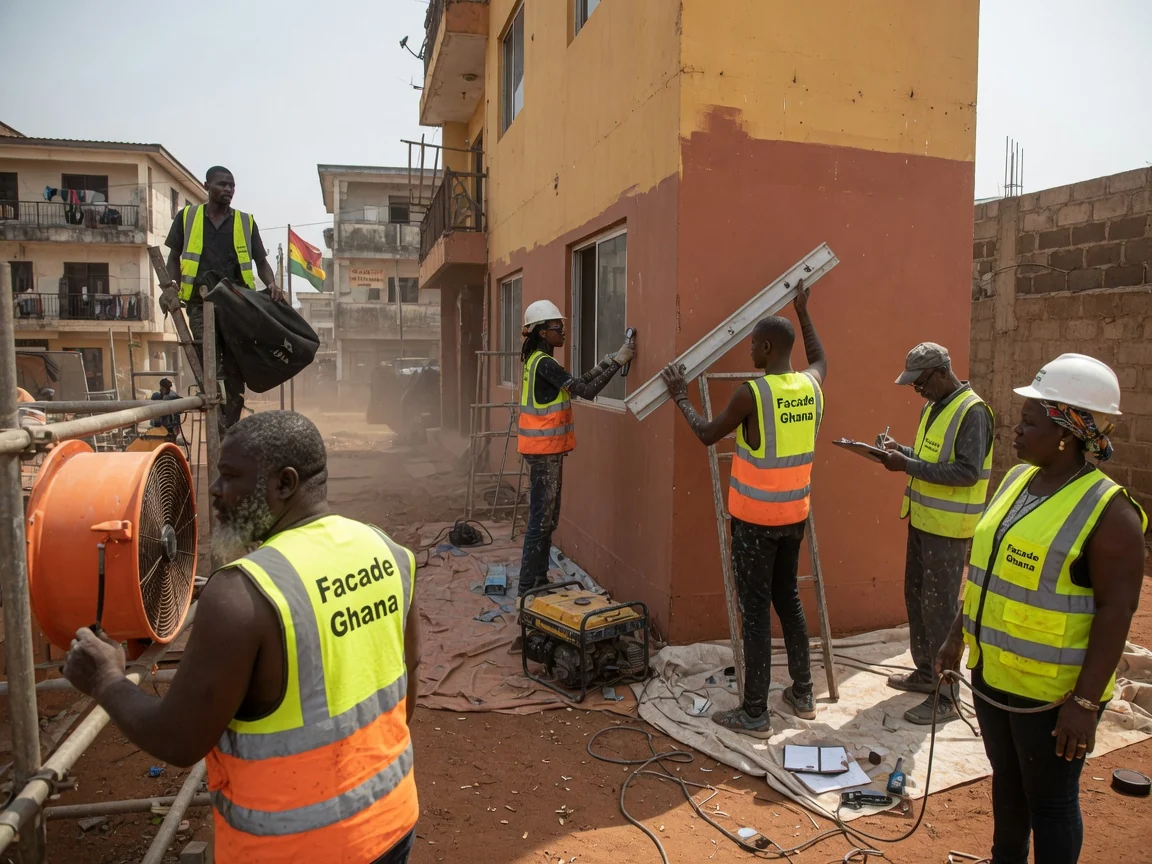
For high-rise and demanding façades, a full-scale mock-up — real panels, frames, joints and seals — is built on a rig and put through the air, water and structural sequence before the production façade is made. It verifies design and workmanship together while a fix is still cheap.
The Performance Tests Compared
| Test | Standard | What it proves | Run for |
|---|---|---|---|
| Structural (wind) load | ASTM E330 | Strength & deflection at design wind pressure | All performance façades |
| Air infiltration | ASTM E283 | Air leakage is within limit under pressure | Sealed, conditioned buildings |
| Water — static | ASTM E331 | Weathertight under steady static pressure | All performance façades |
| Water — dynamic | AAMA 501.1 | Weathertight under wind-driven rain | Exposed & high-rise façades |
(The test programme is set to the building’s height, exposure and design wind pressure; the standard and pressure tested are named in every report.)
How We Wind-Load & Pressure Test a Façade
- Establish the design wind pressure — from height, exposure and the worst elevation, before any detail is signed off.
- Build the mock-up and test to standard — air (ASTM E283), static water (ASTM E331), structural load (ASTM E330) and dynamic water (AAMA 501.1) where required.
- Find the leak, fix the detail, re-test — trace a failure to the gasket, joint or fixing, correct it and re-test rather than wave it through.
- Document the results and hand over the evidence — pressures applied, pass/fail and corrected details recorded in the test report.
Materials & Real Standards
- ASTM E330 — structural (wind) load: the façade’s strength and deflection under positive and negative design wind pressure
- ASTM E283 — air infiltration: air leakage through the assembly measured under a specified pressure difference
- ASTM E331 — water penetration under uniform static air-pressure difference
- AAMA 501.1 — dynamic water penetration, using a wind source so wind-driven rain is simulated, within the wider AAMA 501 family of curtain-wall test methods
- We name the standard and the pressure actually tested in every report, and never claim a result a test did not produce — no fabricated wind-speed or pass figure.
What Affects the Cost
- The test scope — a full-scale mock-up programme versus a simpler verification
- The number of tests and the design wind pressures the façade must reach
- The size and complexity of the mock-up (panels, frames, joints to be represented)
- Re-testing where a detail is corrected, and rig time and access
Façade testing is quoted on survey — the building’s height, exposure and design wind pressure decide the scope, and the scope decides the figure. The honest position is that the testing cost is small against the cost of a façade that fails on the building.
Applications Across Ghana
- High-rise bank, corporate and government towers in Airport City, Ridge and the CBD
- Exposed coastal façades in Accra, Tema and Takoradi where wind-driven rain is the real test
- Hospitals, hotels and institutional buildings where weathertightness is non-negotiable
- Curtain-wall and structural-glazing commissions verified by mock-up before production
- Demanding commercial façades in Kumasi and Takoradi
Areas We Serve
Facade Ghana wind-load and pressure tests façades across Greater Accra — Ridge, Airport City, Cantonments, the CBD, Tema, East Legon and Spintex — plus Kumasi and Takoradi.
Related Services
- Solar-Optimised Façade — climate-performance façades
- Stick-Built Curtain Wall — site-assembled glazed envelopes
- Unitised Curtain Wall — factory-built façade units
- Structural Glazing — flush, frameless glazed elevations
- Ventilated Rainscreen — drained, back-ventilated façades
- Façade BIM Coordination — modelled, clash-free façades
- Heritage Façade Restoration — restoring existing envelopes
- Façade Systems Compared — choosing between systems
- Curtain Wall Cost — Ghana — the cost picture
Frequently Asked Questions
Why does a façade need wind-load and pressure testing? A façade is the building’s skin against wind and rain, and on a tall building the pressures are large and a failure — water ingress, air leakage, panel movement — is serious. Testing proves the envelope can take its design wind pressure, stay weathertight and stay put, before it is committed to the building. You fail on the rig instead of on the tower.
What standards do you test a façade to? ASTM E330 for structural (wind) load, ASTM E283 for air infiltration, and ASTM E331 for water penetration under static pressure; for wind-driven rain we use AAMA 501.1 dynamic water, within the AAMA 501 family. We name the standard and the pressure tested in the report.
What is a façade mock-up and when do you need one? A mock-up is a full-scale section of the real façade — its actual panels, frames, joints and seals — built on a test rig and put through the air, water and structural tests before the full façade is fabricated. It is used on high-rise and demanding façades, proving design and workmanship while a fix is still cheap.
Does Ghana’s wind climate really require this? On the buildings that matter, yes. Ghana is not a hurricane belt, but tall buildings concentrate wind, coastal Accra and Tema are exposed, and a façade failing on an occupied high-rise is severe regardless of frequency. Testing to design wind pressure is how a serious building proves its skin will hold — quoted on survey.